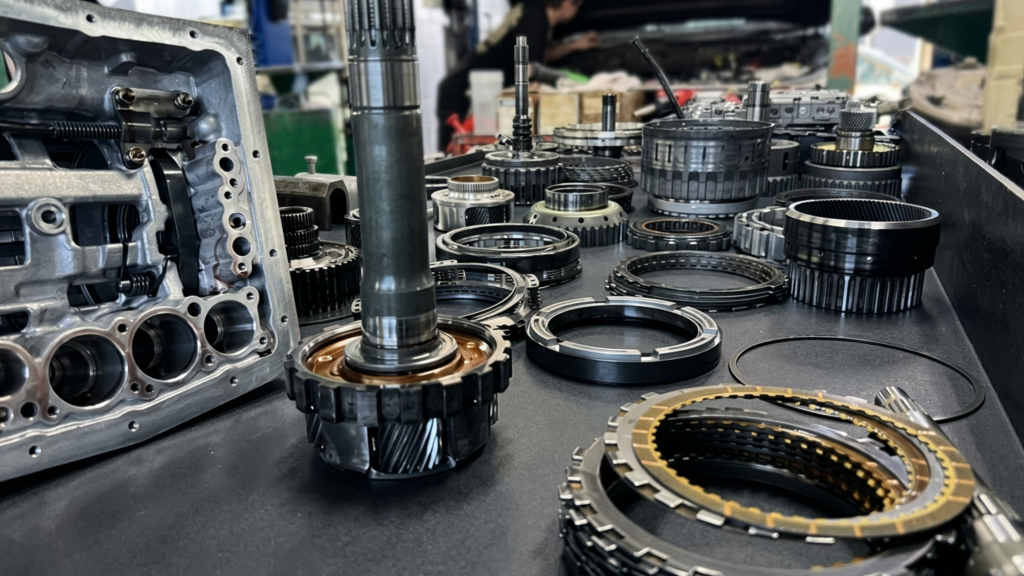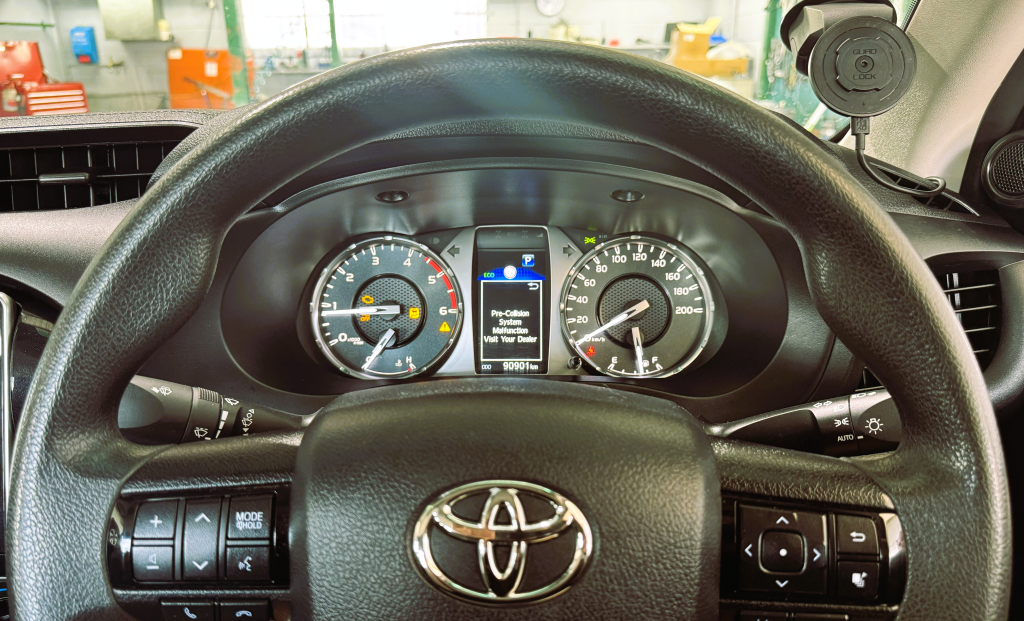

Towing with an automatic transmission is normal for plenty of Australian drivers. Caravans, boats, work trailers, horse floats and campers are all regularly towed behind modern automatic vehicles.
A well set up automatic can tow reliably for years, but towing places far more heat and load through the transmission than normal driving. The extra weight affects the engine, torque converter, transmission, cooling system, driveline and brakes.
The biggest concern is heat.
When an automatic transmission is towing, the torque converter can generate a significant amount of heat, especially during acceleration, hill climbs, soft sand driving, stop-start traffic and low-speed manoeuvring. If that heat is not controlled, transmission fluid temperature rises, and the fluid starts to break down faster.
This article explains what happens inside an automatic transmission when towing, how driving habits affect transmission temperature, what tow haul mode does, when manual gear selection helps, and why servicing and cooling upgrades matter.
How Towing Affects an Automatic Transmission
An automatic transmission relies on transmission fluid to lubricate internal components, apply clutch packs, control hydraulic pressure, transfer heat, and operate the torque converter.
When towing, everything works harder.
The vehicle is heavier, the engine is under more load, the torque converter must work harder to get the vehicle moving, and the transmission spends more time holding lower gears or shifting under load.
The torque converter is one of the biggest heat sources in an automatic transmission. It creates heat any time there is slip between engine speed and transmission input speed. Some converter slip is normal, but towing increases the amount of work the converter has to do.
That heat then must be removed through the transmission cooling system. If the heat is being generated faster than the cooling system can remove it, transmission temperature rises.
This is why towing is harder on an automatic transmission than normal driving, even when the vehicle is still within its rated towing capacity.
Tow Haul Mode and Modern Transmission Strategy
Many vehicles have a tow haul mode, tow mode or trailer mode. When fitted, it should usually be used while towing.
Tow haul mode changes the transmission shift strategy to better suit a loaded vehicle. Depending on the vehicle, it may hold gears longer, downshift earlier, reduce unnecessary gear hunting, increase torque converter lock-up, and use more engine braking on descents.
The aim is to reduce unnecessary shifting and converter slip, which helps reduce heat.
Some modern vehicles do not have a simple tow haul button. Instead, the transmission control system can recognise load through throttle position, engine load, vehicle speed, torque converter slip, shift behaviour and other sensor data. The vehicle may adapt its shift strategy because it can tell it is working harder.
Even with this technology, the driver still matters.
The vehicle can only react to what it is sensing at the time. The driver can see the hill coming, see the descent ahead, feel the load, and choose the right mode or gear before the transmission is forced to make a loaded shift.
Gear Selection on Hills and Long Descents
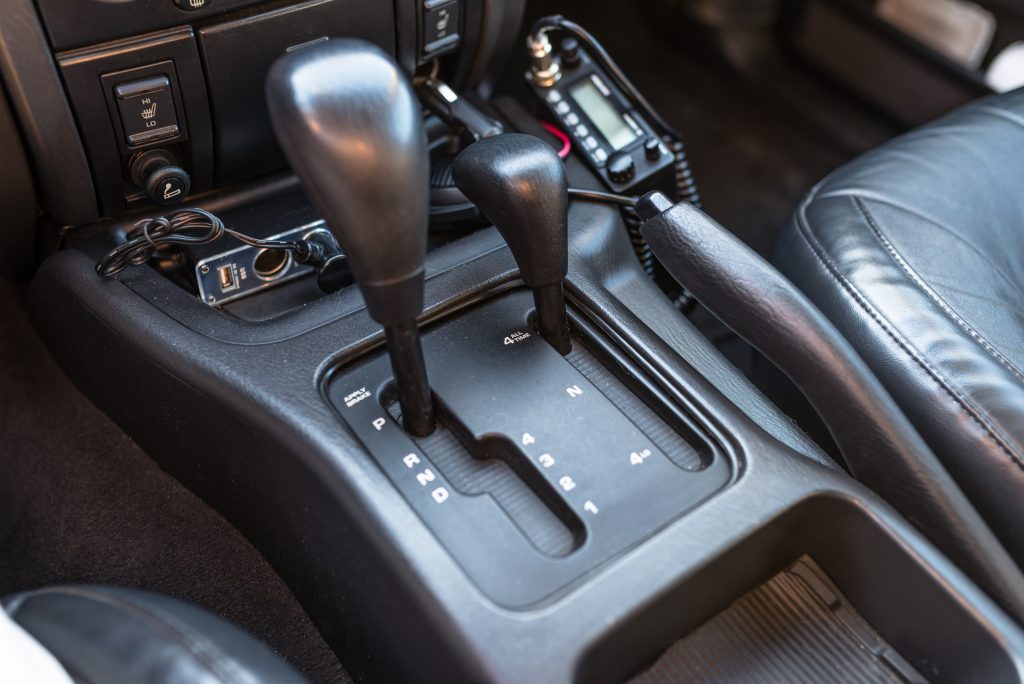
Leaving the vehicle in Drive works fine in many towing situations, especially on flat roads with tow haul mode active. But on long climbs and descents, manual gear selection can make a real difference.
Climbing Hills
When towing up a hill, the transmission may try to hold a higher gear until load increases enough to force a downshift. That downshift happens under load, which increases heat and stress through the transmission.
If the driver can see the climb coming, it is often better to manually select a lower gear early. This lets the vehicle climb in a more suitable gear before it is struggling.
That can reduce gear hunting, reduce loaded shifts and help keep the transmission in a more stable operating range.
A simple rule is this: if the vehicle is already comfortable in a certain gear on that type of hill, select that gear before the transmission has to fight for it.
Long Descents
On long downhill sections, manually selecting a lower gear helps use engine braking to control vehicle speed.
This takes load off the brakes and reduces brake heat. It also helps stop the transmission from constantly shifting up and down while trying to manage road speed.
The goal is not to overrev the engine. Modern automatics with manual or sequential shift modes will generally prevent a gear selection that would damage the engine. The goal is to choose a gear that gives controlled engine braking without riding the brakes the whole way down.
Transmission Temperature When Towing
Transmission temperature is one of the most important things to understand when towing with an automatic transmission.
As a general guide, a healthy operating temperature range is around 60 to 85 degrees Celsius.
Once transmission temperature is above 100 degrees Celsius, we consider it hot.
Once it is above 110 degrees Celsius, we consider it very hot.
The higher it goes from there, and the longer it stays there, the greater the risk of fluid breakdown and long-term transmission wear.
Short temperature spikes under load are not always a major concern. The bigger issue is sustained heat. If the transmission climbs above a healthy operating range and stays there during normal towing, that is where cooling, driving style and service condition need to be looked at.
Many vehicles do not show real transmission temperature on the dash. Some show a basic range indicator, and some only display a warning once the transmission is already too hot. This is why a scan tool or dedicated transmission temperature monitor is useful for regular tow vehicles.
Real temperature data helps the driver understand what is happening and make better decisions before the transmission reaches a warning stage.
What to Do if Transmission Temperature Starts Climbing
If transmission temperature starts climbing while towing, the goal is to reduce load and heat generation.
Helpful actions include:
- Ease off the throttle
- Drop to a lower gear before the vehicle struggles
- Use tow haul mode if fitted
- Avoid unnecessary gear hunting
- Reduce speed
- Pull over safely and let the transmission cool if temperatures continue rising
- Avoid pushing on if a warning light or limp mode appears
If a vehicle repeatedly runs above a healthy temperature range during normal towing, it is worth looking at the cooling system, transmission service condition and whether a transmission cooler upgrade is suitable.
Auxiliary Transmission Coolers
A transmission cooler upgrade is one of the best reliability upgrades for a vehicle that tows regularly.
Towing creates more heat. A cooler gives the transmission more ability to remove that heat before fluid temperature climbs too high.
A transmission cooler can help with:
- Lower transmission fluid temperatures
- Better temperature recovery after climbs
- More stable towing temperatures
- Reduced heat build-up in slow speed work
- Longer transmission fluid life
- Improved long-term reliability
For a tow vehicle, a cooler is cheap insurance compared with the cost of transmission damage caused by sustained heat.
The right cooler depends on the vehicle, towing weight, airflow, existing cooling system and how the vehicle is used. Some modern vehicles also require thermal control valve modifications or cooling system changes to make sure the cooler is being used properly.
A cooler should be treated as part of the complete transmission cooling system, not just a universal part fitted to the front of the vehicle.
Pre Tow Checks Worth Doing
Before a big towing trip, it is worth checking the transmission before it is placed under load.
Transmission Fluid Condition
Clean transmission fluid is critical. If the fluid is old, dark, burnt smelling or contaminated, it should be serviced before towing.
On vehicles without a dipstick, fluid condition needs to be checked in the workshop. These transmissions are still serviceable, even if they are called sealed.
Service History
For general use, a transmission service around every 40,000 kilometres or two years is a sensible baseline.
If the vehicle is due soon and a long towing trip is coming up, service it before the trip. Do not wait until it is overdue halfway through the journey.
Cooling System Condition
The engine cooling system and transmission cooling system often share airflow and heat load. Radiator condition, coolant condition, blocked fins, fan operation and general cooling system health all matter.
If the engine cooling system is already struggling, the transmission temperature will usually suffer under tow as well.
Load and Ratings
Vehicle weight matters. GVM, GCM, tow rating and tow ball weight are not just legal numbers. They affect how hard the transmission, engine, brakes and driveline have to work.
Overloading the vehicle increases heat and stress through the entire drivetrain.

Signs the Transmission Is Struggling Under Tow
Transmission problems under tow can appear in different ways. Some are signs of heat. Some are signs of load. Some may point to an existing fault being exposed by towing.
Warning signs include:
- Slipping under load
- Engine revs rising without matching road speed
- Shuddering under acceleration or converter lock-up
- Harsh or delayed shifts
- Gear hunting that does not settle
- Burning smell after towing
- Transmission temperature warnings
- Limp mode
- Fluid that smells burnt after towing
Modern transmissions can also change shift strategy when they get hot. The vehicle may hold gears longer, change converter lock-up behaviour, reduce performance or shift differently as part of a high-temperature protection strategy.
That does not automatically mean the transmission has failed. It may mean the transmission is trying to reduce heat and protect itself.
If this becomes a regular part of towing, the vehicle needs better heat management. That may involve servicing, temperature monitoring, cooling upgrades, driving changes or further diagnosis depending on the vehicle.
Servicing Intervals for Tow Vehicles
Factory service intervals are usually based on standard driving. Towing is not standard driving.
For a vehicle used normally, a transmission service around every 40,000 kilometres or two years is a good general guide.
For a dedicated tow vehicle, or a vehicle that does most of its kilometres towing, touring, driving in sand or working hard, that interval should often be reduced.
A more suitable interval may be around 20,000 kilometres or 12 months for heavy use.
This is especially important if the vehicle tows in hot weather, runs close to its weight limits, uses larger tyres, does off-road work, or carries constant weight.
Transmission servicing is preventative maintenance. It keeps the fluid clean, helps protect internal components and gives the workshop a chance to assess what is happening inside the transmission before problems become expensive.
The “Sealed for Life” Claim
Sealed for life does not mean the transmission fluid lasts forever.
It usually means there is no dipstick and the transmission is not designed for the owner to check it easily. The fluid still gets hot, still oxidises, still collects wear material and still loses performance over time.
Automatic transmissions are serviceable and should not be ignored.
This is especially true for tow vehicles. Heat and load shorten fluid life. A transmission that tows regularly should be serviced based on how the vehicle is used, not based on a vague sealed for life claim.
Repair, Reconditioning or Preventative Work
If a transmission already has symptoms under tow, the next step depends on what is found during diagnosis.
A service may be suitable if the transmission is operating correctly and the fluid is simply due for replacement.
A repair may be suitable if there is a confirmed fault, such as a solenoid issue, valve body issue, leak or specific component failure.
Reconditioning may be required when there is widespread wear, internal damage or repeated failure symptoms.
The important thing is that the decision should be based on diagnosis, not guesswork. A cooler or service will not repair a transmission that is already slipping or damaged internally.
What to Do Before Your Next Towing Trip
If you are planning a towing trip, the best time to check the transmission is before you leave.
A pre-tow transmission check may include:
- Fluid condition check
- Service history review
- Fault code scan
- Cooling system review
- Road test
- Temperature monitoring
- Advice on cooler upgrades if required
If the transmission is already overdue for service, running hot or showing symptoms, towing will usually make the issue worse.
Ron Hill Automatics can inspect the vehicle, check transmission condition and recommend servicing, cooling upgrades or further repairs based on how the vehicle is actually used.
Frequently Asked Questions
Do you need an auxiliary transmission cooler for towing?
Not every tow vehicle needs one, but for regular towing it is one of the best upgrades you can make. Towing generates more heat, and a cooler gives the transmission more ability to remove that heat. For heavy towing, hot climates, beach work or long-distance touring, a cooler is often worth considering.
Do you need tow haul mode when towing with an automatic?
If the vehicle has tow haul mode, it should usually be used when towing. It changes the shift strategy to better suit load, reduce unnecessary gear hunting, improve converter lock-up, and provide more engine braking on descents.
Some modern vehicles do not have a tow haul button, but still adapt their shift strategy when they detect load.
Should you manually select gears when towing?
On flat roads, Drive with tow haul mode is usually fine. On long climbs or descents, manual gear selection can help.
Selecting a lower gear before a climb can reduce loaded downshifts and gear hunting. Selecting a lower gear on descents helps use engine braking and reduces brake heat.
What temperature is too hot for an automatic transmission?
As a general guide, a healthy range is around 60 to 85 degrees Celsius. Above 100 degrees is hot. Above 110 degrees is very hot. The concern is not one short spike, but sustained high temperature while towing.
How often should a tow vehicle transmission be serviced?
For general use, around 40,000 kilometres or two years is a sensible baseline. For vehicles that tow regularly or do hard use, reducing that to around 20,000 kilometres or 12 months is often more appropriate.
Are sealed automatic transmissions serviceable?
Yes. Sealed does not mean unserviceable. It usually means there is no dipstick or easy owner check point. The transmission fluid still wears out and should still be serviced, especially in tow vehicles.
What are the signs of transmission strain while towing?
Signs include slipping, shuddering, harsh shifts, delayed shifts, gear hunting, burning smell, temperature warnings and limp mode. The transmission may also change shift behaviour when hot as part of a protection strategy.
Can a transmission cooler fix an existing fault?
No. A cooler helps control temperature. It does not repair a transmission that already has internal wear, slipping, converter problems or valve body faults. Existing symptoms should be diagnosed before upgrades are fitted.
Talk to Ron Hill Automatics Before Your Next Tow Trip
Towing places extra load and heat through an automatic transmission. With good servicing, correct driving habits and the right cooling setup, many automatic transmissions can tow reliably for years.
If your vehicle is used for caravan towing, boat towing, touring, beach driving or heavy load work, Ron Hill Automatics can inspect the transmission, check fluid condition, review operating temperature and recommend the right servicing or cooling upgrades for your use.
Make an enquiry or call Ron Hill Automatics on (07) 5443 4444.