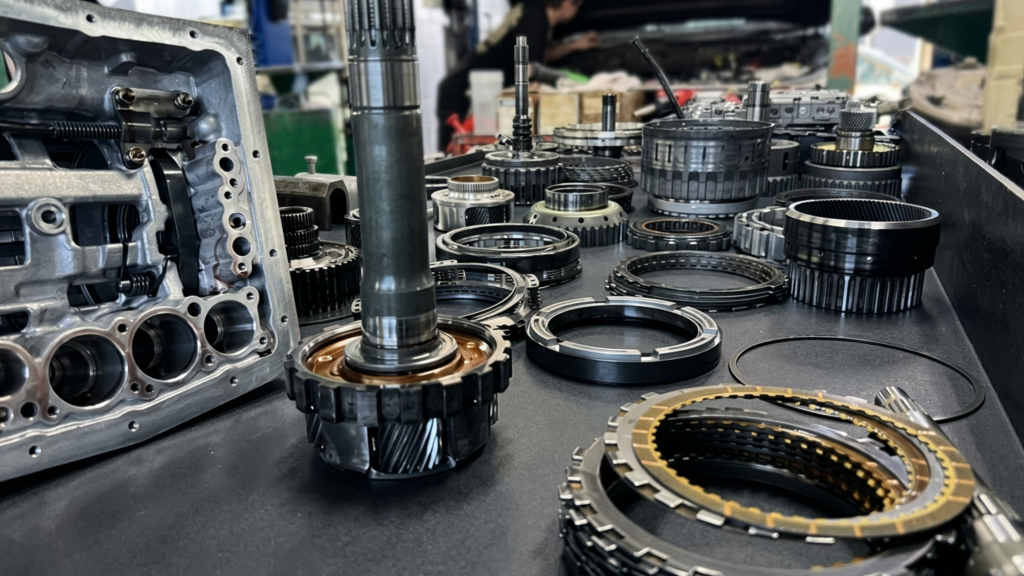

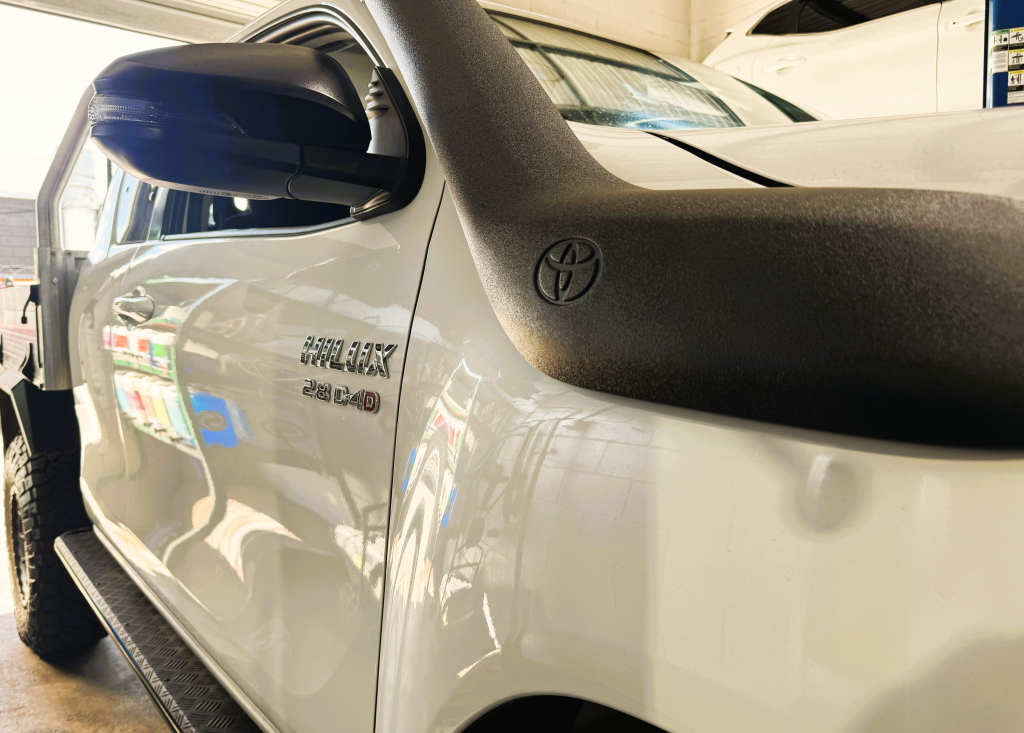
If your Toyota Hilux’s check engine light has come on and your automatic transmission is behaving strangely, there’s a good chance a diagnostic trouble code related to the transmission system is to blame. Three of the most common transmission fault codes that Hilux owners encounter are P0741, P0746, and P0776. Each one points to a different problem within the transmission’s hydraulic and electronic control system.
In this guide, we’ll break down what each code means, what causes it, the warning signs to watch for on your dashboard, and how to address the issue before it leads to costly damage.
Why Transmission Fault Codes Matter for Your Toyota Hilux
Your Toyota Hilux relies on a network of solenoids, sensors, and electronic control modules to manage gear shifts smoothly. When the vehicle’s powertrain control module (PCM) or transmission control module (TCM) detects that something in this system isn’t performing as expected, it stores a diagnostic trouble code and typically illuminates the check engine light on your dashboard.
Ignoring these fault codes can lead to serious consequences. A transmission that isn’t receiving the correct fluid pressure or that can’t lock the torque converter properly will run hotter, shift harshly, and wear out internal components much faster. For Hilux owners who tow trailers or drive off-road regularly, the stakes are even higher. Heavy loads amplify every underlying transmission problem. A professional transmission diagnostic is the best first step to understanding exactly what’s going on.
P0741 Toyota: Torque Converter Clutch Circuit Performance or Stuck Off
The P0741 code is one of the most frequently reported transmission fault codes across the Toyota range, and the Hilux is no exception. This trouble code indicates that the torque converter clutch (TCC) is not engaging properly or is stuck in the off position.
What the Code Means
Your Hilux’s torque converter contains a lockup clutch that creates a direct mechanical connection between the engine and transmission at highway speeds. This eliminates the power losses that occur when the transmission relies purely on fluid coupling, which improves fuel efficiency and reduces heat. The PCM triggers P0741 when it detects a difference of more than 200 RPM between the torque converter speed and the transmission input shaft speed. This is a clear sign the lockup clutch isn’t doing its job.
Common Causes
Several issues can trigger a P0741 Toyota code in your Hilux:
- A faulty torque converter clutch solenoid that can’t properly direct fluid pressure to engage the lockup clutch
- A worn or failing torque converter clutch, similar to how a manual clutch disc wears over time
- Damaged or corroded wiring between the TCC solenoid and the transmission control module
- Pressure regulation issues caused by a worn converter clutch regulation valve or valve bore wear in the valve body.
- In rare cases, a malfunctioning TCM or PCM
For Hilux owners who tow frequently, a valve body upgrade can help prevent this code from occurring by rectifying valve body wear and recalibrating pressures for towing and heavy-duty use.
Symptoms to Watch For
The most obvious sign is your check engine light turning on. Beyond that, you may notice slightly higher RPMs at highway speed (since the converter isn’t locking), reduced fuel economy, and in some cases a shudder or vibration when driving at a consistent speed. The engine may also feel unusually responsive at cruise. Not because it’s performing better, but because it’s spinning faster than it should.
How Serious Is It?
P0741 is considered a serious code. While your Hilux will still drive, the unlocked torque converter generates significant extra heat in the transmission, especially under load. Continued driving without addressing the problem can damage internal transmission components and lead to a much more expensive repair.
P0746 Toyota: Pressure Control Solenoid “A” Performance or Stuck Off
The P0746 code indicates that Pressure Control Solenoid A (often referred to as SL1 in Toyota’s documentation) is not functioning correctly. This solenoid plays a critical role in regulating transmission fluid pressure to ensure smooth, correctly timed gear shifts.
What the Code Means
Automatic transmissions use multiple pressure control solenoids to direct hydraulic fluid at precise pressures to the clutch packs and bands that engage each gear. When the PCM commands a specific pressure and the actual system response doesn’t match, it sets a fault code. A P0746 Toyota code means the PCM has lost effective control over the “A” pressure circuit. Either the solenoid is stuck, the wiring is faulty, or internal wear is preventing proper pressure delivery.
Common Causes
- A contaminated or stuck pressure control solenoid can be caused by dirty transmission fluid or debris in the valve body
- Worn valve body bores that affect pressure regulation
- Low transmission fluid level.
- Damaged wiring or corroded connectors to the solenoid
- In some cases, a faulty transmission pump that can’t generate adequate line pressure
- An ECU or TCM malfunction is sending incorrect commands to the solenoid
- Internal clutch pack failure
A proper diagnostic followed by the correct repair or valve body upgrade can address pressure control issues at the source and restore consistent shift performance and reliability.
Symptoms to Watch For
The most common symptom is harsh or delayed shifting. Particularly a noticeable jerk when the vehicle shifts from park or neutral into drive or reverse. Your Hilux may also refuse to shift into a higher gear, get stuck in a single gear (limp mode), or display the check engine warning light. Some owners report the engine stalling at low speeds as the transmission struggles to engage properly.
How Serious Is It?
This code should be addressed promptly. Without proper pressure control, the transmission’s clutch packs can slip and burn, turning what might have been a solenoid replacement into a full transmission rebuild or reconditioning. The problem can escalate quickly, particularly if you continue to drive under heavy load or in stop-start traffic.
P0776 Toyota: Pressure Control Solenoid “B” Performance or Stuck Off
P0776 is closely related to P0746 but refers to the “B” pressure control solenoid (SL2 in Toyota’s system). In many Toyota transmissions, the two codes can appear together because of the same underlying issue, low fluid level, worn valve body, internal clutch issue or general hydraulic instability.
What the Code Means
Like its counterpart, this code means the PCM is commanding a specific pressure behaviour from solenoid B, but the hydraulic system isn’t delivering the expected result. A P0776 Toyota code points to a malfunction in the pressure control circuit that governs a different set of gear engagements than solenoid A.
Common Causes
The causes mirror those of P0746 in most cases:
- A faulty or stuck SL2 solenoid
- Internal valve body wear is causing pressure loss
- Low transmission fluid level
- Wiring damage or connector corrosion
- A failing transmission pump
- Internal clutch pack failure
Symptoms to Watch For
Harsh or delayed gear shifts are the primary symptom. You might notice the transmission slipping during mid-range acceleration, the vehicle hesitating when pulling away from a stop, or rough downshifts when decelerating. Dashboard warning lights, particularly the check engine light and, on some models, a flashing overdrive indicator, are common.
How Serious Is It?
Like P0746, this code represents a loss of precise hydraulic control over the transmission. Driving with it for an extended period risks burning clutch packs and causing damage that requires a full rebuild. If both P0746 and P0776 appear together, the problem is likely systemic. Either an internal clutch pack failure, the valve body is worn, failed solenoids or a low fluid level.
Interpreting Dashboard Warning Lights
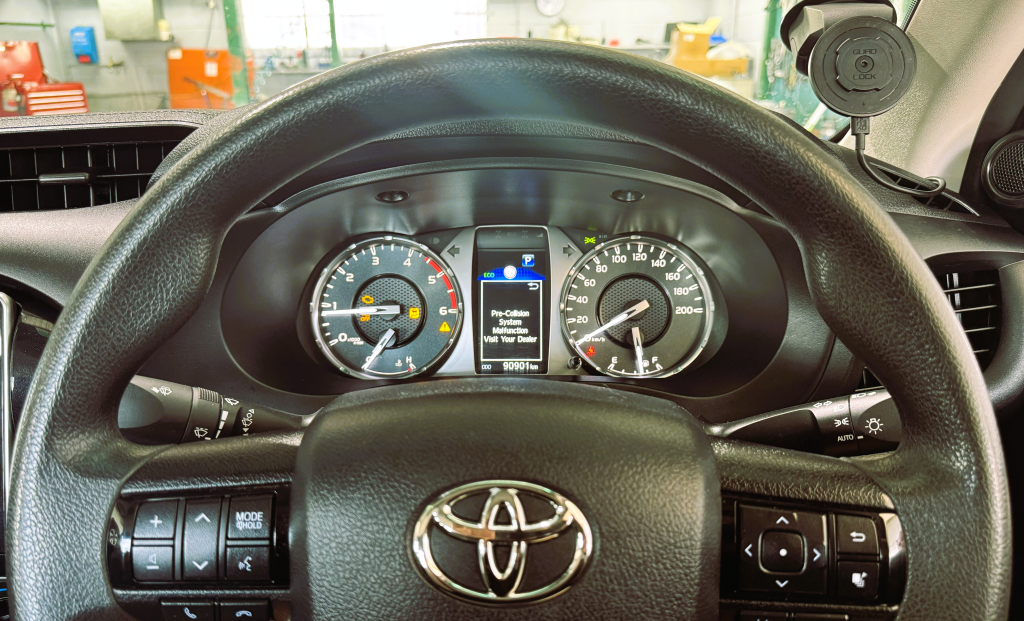
When a transmission fault code is stored, your Toyota Hilux will typically display one or more warning lights on the dashboard. The most common is the check engine light (also called the malfunction indicator lamp), which illuminates for a wide range of engine and transmission problems. Some Hilux models will also flash the overdrive (O/D OFF) indicator to signal a transmission-specific issue.
If you see these lights accompanied by any change in shifting behaviour, harsh shifts, delayed engagement, slipping, or the vehicle stuck in a single gear, pull over safely and avoid driving further until the problem has been diagnosed. Continuing to drive with an active transmission fault code increases the risk of permanent damage.
Diagnosing These Fault Codes with an OBD-II Scanner
The first step in addressing any of these fault codes is to connect an OBD-II scanner to your Hilux’s diagnostic port (usually located under the dashboard on the driver’s side). A basic scanner will read and display the stored codes, which tell you which system is affected.
However, for transmission-specific codes like P0741, P0746, and P0776, a more advanced scan tool is recommended. These tools can display live data such as torque converter slip speed, solenoid duty cycle, transmission fluid temperature, and vehicle speed sensor readings. All of which are essential for pinpointing the root cause. A dealer-level tool provides the most detailed diagnostic information for Toyota vehicles.
After reading the codes, a common diagnostic approach includes checking transmission fluid level and condition (dark or burnt-smelling fluid is a red flag), inspecting the wiring harness to the transmission for damage or corrosion, testing solenoid resistance against manufacturer specifications, battery and charging system health and monitoring live data during road testing to observe how the torque converter and solenoids respond under real driving conditions.
Maintenance That Prevents Transmission Fault Codes
Prevention is always more cost-effective than repair. The single most important thing you can do to protect your Hilux’s automatic transmission is to maintain clean, fresh transmission fluid at the correct level.
While Toyota’s logbook often doesn’t call for transmission servicing until around 100,000 km, real-world conditions tell a different story. Our industry standard for servicing is every 40,000 km or every 2 years, especially for vehicles used for towing, off-road driving, or operating in dusty Australian conditions.
A proper transmission servicing routine includes replacing the transmission filter, ensuring the cooler is clean and unobstructed, and inspecting wiring and connectors as part of regular maintenance. Avoiding sustained heavy towing without allowing the transmission to cool also plays a key role in long-term reliability.
Managing operating temperature is just as important. Automatic transmissions are highly sensitive to heat, with excessive temperature being the leading cause of wear and failure. Maintaining a healthy operating range of 60 to 85 degrees significantly improves longevity, which is why a transmission cooling system upgrade is one of the most effective preventative measures.
Addressing small issues early, such as a slight delay in shifting or a momentary shudder at highway speed, can prevent the kind of cascading failure that turns a minor solenoid issue into a major rebuild.
When to See a Professional
While checking fluid levels and reading basic fault codes are tasks most Hilux owners can handle at home, diagnosing and repairing transmission solenoid and torque converter issues requires specialist equipment and expertise. If your vehicle is displaying any of these codes, a qualified transmission specialist can perform the advanced testing needed to determine whether the fix is as straightforward as a fluid flush and solenoid replacement or whether deeper internal work is required.
Don’t delay. The longer a transmission runs with compromised pressure control or a failing torque converter clutch, the more expensive the eventual repair becomes.
Need Help With Your Hilux Transmission?
If your Toyota Hilux is showing any of these fault codes or you want to protect your transmission before problems start, Ron Hill Automatics is a trusted automatic transmission specialist on the Sunshine Coast with over 50 years of experience working on Toyota transmissions. Get in touch today for honest advice, upfront pricing, and expert diagnostics, whether you need a repair, a service, or a performance upgrade for towing and touring.
Frequently Asked Questions
What are the most common fault codes for the Toyota Hilux?
The Toyota Hilux can produce a wide range of diagnostic trouble codes across its engine, transmission, ABS, SRS, and emissions systems. For automatic transmission models, some of the most frequently seen codes include P0741 (torque converter clutch performance), P0746 and P0776 (pressure control solenoid A and B performance), and P2714 (pressure control solenoid D). On the engine side, common codes relate to oxygen sensor circuits, fuel system lean or rich conditions, intake manifold pressure sensor issues, and exhaust gas recirculation problems. Diesel Hilux models may also display codes related to the diesel particulate filter, fuel injector circuits, and turbo boost pressure.
How can I use OBD-II to diagnose my Toyota Hilux?
To read fault codes on your Hilux, you’ll need an OBD-II scanner (available from most auto parts stores). Locate the OBD-II diagnostic port under the dashboard on the driver’s side, plug in the scanner with the ignition turned to the “on” position, and follow the scanner’s prompts to read stored codes. Basic scanners will display the code number, which you can then look up, while more advanced tools provide freeze frame data, live sensor readings, and the ability to clear codes after a repair. For deeper transmission diagnostics, a professional-grade scanner that can read transmission-specific data is recommended, or you can book a professional diagnostic with a transmission specialist.
What does each fault code mean, and how should I address it?
Each fault code identifies a specific circuit or system where the vehicle’s computer has detected abnormal performance. P0741 indicates the torque converter clutch is not engaging as expected. Start by checking the transmission fluid condition and the TCC solenoid wiring. P0746 points to a pressure control solenoid A malfunction. Inspect the fluid, wiring, and solenoid, and consider a valve body inspection. P0776 signals the same type of problem in the B solenoid circuit. In all cases, begin with a thorough fluid check, move to wiring and connector inspection, and then test the solenoids themselves. If these steps don’t resolve the issue, a professional diagnosis of the valve body, torque converter, and transmission pump is the next step.
How do the various warning lights on the dashboard relate to fault codes?
Dashboard warning lights are the visible signal that your vehicle’s computer has stored one or more fault codes. The check engine light (malfunction indicator lamp) can illuminate for both engine and transmission trouble codes. A flashing overdrive or O/D OFF light specifically indicates a transmission-related issue on many Hilux models. ABS and SRS warning lights relate to their own separate fault code systems. When a light comes on, the corresponding code stored in the vehicle’s computer tells you exactly which sensor, circuit, or system triggered the warning, which is why reading the code with a scanner is essential for accurate diagnosis.
What maintenance can prevent fault codes from appearing?
Regular preventive maintenance is the best defence against fault codes. For the transmission, this means changing the fluid and filter at scheduled intervals. Keep the transmission cool with the help of transmission cooling system upgrades and promote longevity and reliability by reducing operating temperatures.