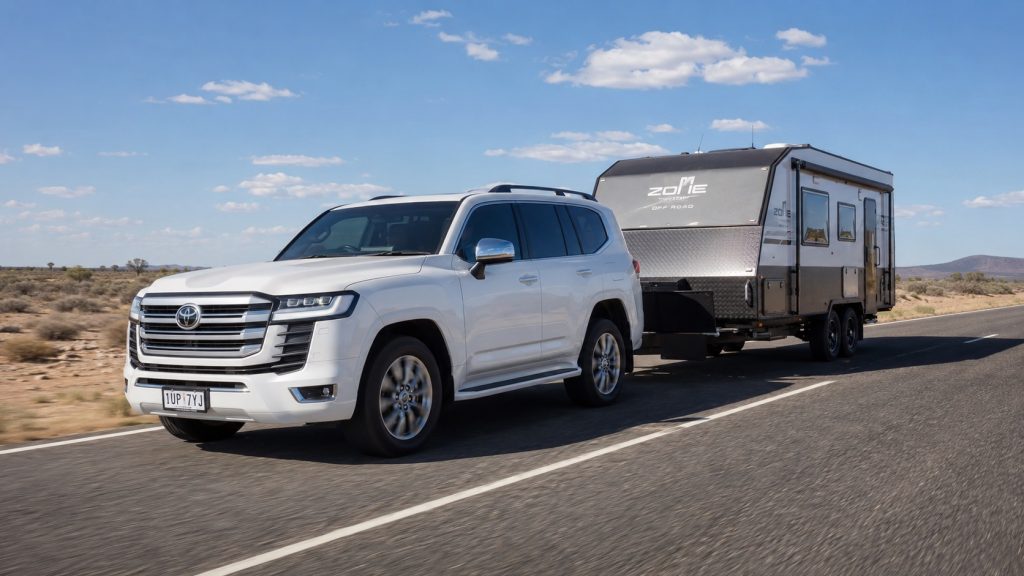

An automatic transmission takes power from the engine and automatically selects the right gear for the vehicle’s speed, load and driving conditions.
Power from the engine is transferred through the torque converter and into a series of internal gearsets. Hydraulic pressure applies different clutch packs inside the transmission to control which gears are engaged. The valve body directs transmission fluid to where it is needed, while the transmission control module manages when and how each gear change takes place.
Modern automatic transmissions bring all of these systems together to provide smooth gear changes, efficient power delivery and the right gear at the right time.
Below, we’ll break down the main components of an automatic transmission, what actually happens during a gear change, how an automatic differs from a manual transmission, and why transmission fluid plays such an important role.
What Does a Transmission Do?
A transmission matches engine speed to road speed, allowing the engine to operate effectively across a wide range of vehicle speeds.
Lower gears provide greater torque multiplication for taking off, towing, climbing hills and driving under load. Higher gears reduce engine speed once the vehicle is moving, making highway driving smoother and more efficient.
An automatic transmission selects these gears for you based on factors such as vehicle speed, throttle input and engine load. The torque converter also allows the engine to keep running while the vehicle is stationary, without the need for the driver to operate a clutch.
The Main Parts of an Automatic Transmission
An automatic transmission contains many individual components, but a handful of key systems do most of the work. Understanding what each one does makes it much easier to understand how an automatic transmission transfers power, changes gears and controls vehicle speed.
Torque Converter
The torque converter sits between the engine and the transmission and performs a similar role to the clutch in a manual vehicle, but it does it hydraulically.
Inside the converter are several components surrounded by transmission fluid. The engine drives the impeller, which moves fluid through the converter and transfers energy to the turbine. The turbine then drives the input shaft of the transmission.
Because this connection is hydraulic, the engine can continue running while the vehicle is stationary. It also allows a degree of torque multiplication when taking off or accelerating under load.
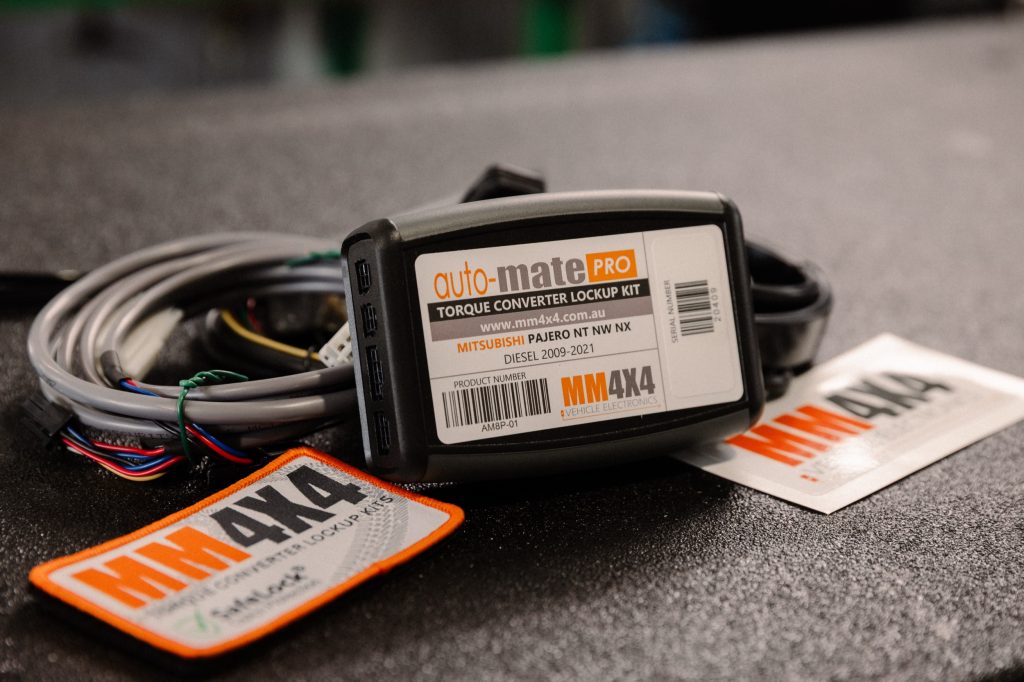
Most modern automatic transmissions also use a torque converter lock-up clutch. When conditions are suitable, this clutch creates a mechanical connection through the converter, reducing unnecessary slip, improving efficiency and helping control transmission temperature.
Planetary Gearsets
Most conventional automatic transmissions use planetary gearsets to create their different gear ratios.
A planetary gearset typically consists of a central sun gear, planet gears mounted in a carrier, and an outer ring gear. By holding, driving or connecting different parts of the gearset, the transmission can produce different ratios for acceleration, cruising and reverse.
Modern transmissions combine multiple gearsets and clutch arrangements to provide six, eight, ten or more forward gears while keeping the transmission relatively compact.
Clutch Packs And Bands
Inside an automatic transmission, clutch packs are used to connect and hold different components of the gearsets.
Each clutch pack contains alternating friction and steel plates. When hydraulic pressure is applied, the plates are squeezed together and the clutch engages. By controlling which clutches are applied and released, the transmission can select different gear ratios.
Some automatic transmissions also use bands to hold particular drums or components, although these are less common in many modern designs.
Because clutch packs rely on friction material, correct hydraulic pressure and suitable transmission fluid are critical. Worn friction material, hydraulic pressure problems or other internal faults can cause symptoms such as slipping, flaring between gears or poor shift quality.
Valve Body
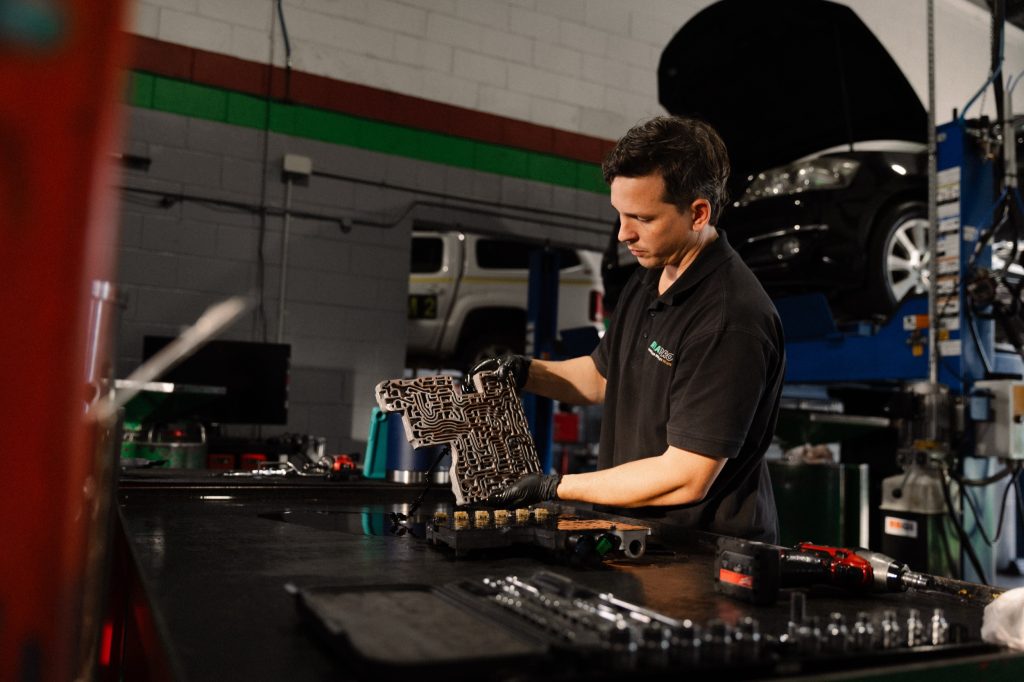
The valve body is the hydraulic control centre of an automatic transmission.
It contains a network of precisely machined fluid passages, valves and electronically controlled solenoids. Pressurised transmission fluid is directed through the valve body to control the clutch packs and other hydraulic components inside the transmission.
The valve body has a major influence on shift timing, shift pressure and overall shift quality. Wear, contamination, sticking valves or solenoid problems can contribute to symptoms such as harsh shifts, delayed engagements, flaring and inconsistent gear changes.
Transmission Control Module And Solenoids
Modern automatic transmissions are electronically controlled.
The transmission control module, or TCM, uses information such as vehicle speed, throttle position, engine load, transmission temperature and driver demand to determine when and how the transmission should change gears.
It then commands electronic solenoids inside the transmission or valve body to regulate hydraulic pressure and control clutch operation.
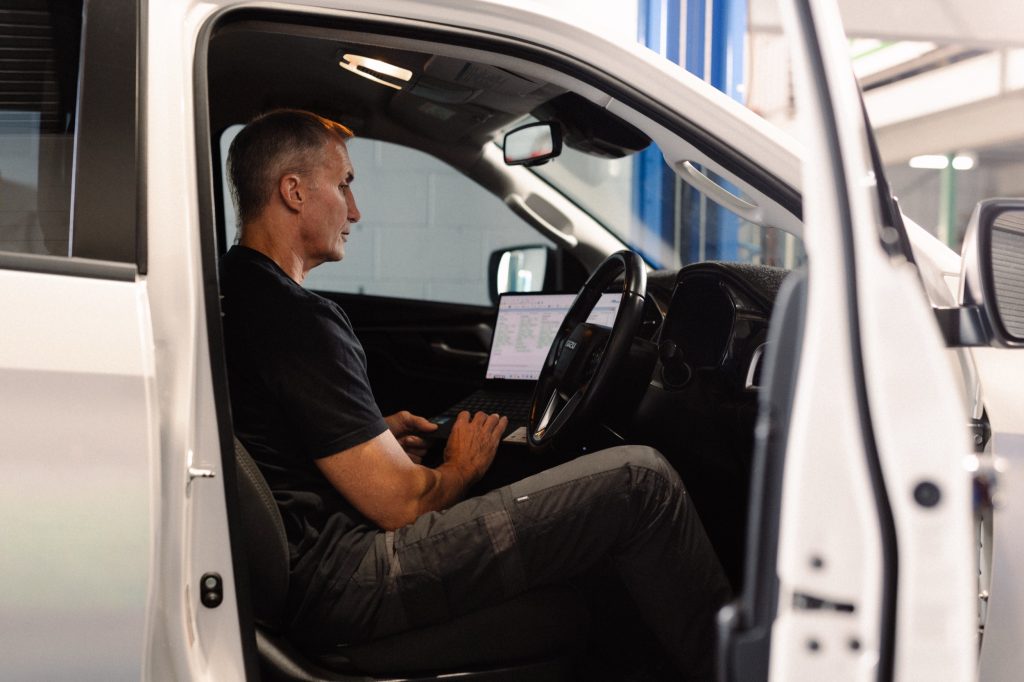
The TCM also monitors how the transmission responds to these commands. If the expected result does not occur, it can store a transmission fault code to help identify the system or circuit where a problem has been detected.
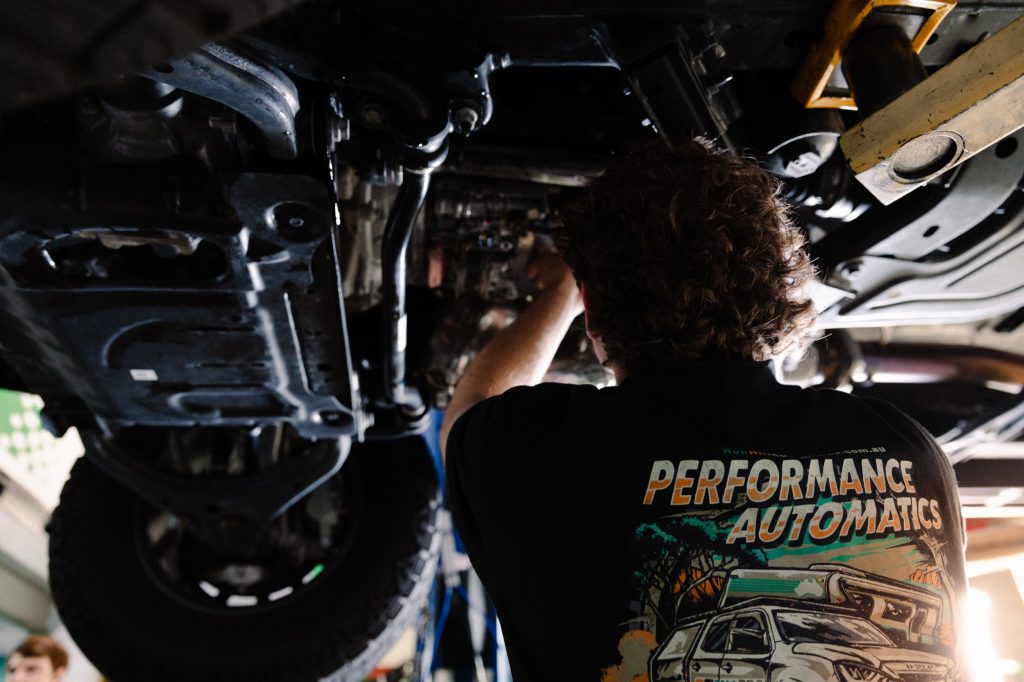
How Does an Automatic Transmission Change Gears?
Take a 4WD with a caravan in tow. As you pull away, the torque converter transfers power from the engine into the transmission. At lower speeds it allows some controlled slip and, under the right conditions, can also multiply torque to help get the vehicle and load moving.
As you accelerate, the transmission control system is constantly looking at information from around the vehicle. This can include road speed, engine RPM, throttle position, engine load, transmission temperature and other driver inputs. Using this information, the transmission control module calculates which gear is required, when the shift should occur and how the shift should be carried out.
Once a gear change is commanded, the transmission uses electronically controlled solenoids to regulate and direct transmission fluid through specific passages in the valve body. That hydraulic pressure is then sent to the required clutch packs inside the transmission, applying and releasing different components to produce the next gear ratio.
As you continue to accelerate, this process repeats as the transmission works through the gears, continually adjusting its operation to suit speed, load and driver demand.
In modern automatic transmissions, the control system will generally aim to apply the torque converter lock-up clutch as early as operating conditions allow. Reducing converter slip improves efficiency, lowers heat generation and helps achieve better fuel economy. The transmission can then continually adjust or release lock-up as vehicle speed, load and driver demand change.
Automatic Vs Manual Transmission: What Is Different?
A manual transmission relies on the driver to operate the clutch and select gears. An automatic transmission handles both of these functions for you.
The practical differences include:
- Convenience: an automatic selects gears for you based on vehicle speed, load and driver demand, making it easier to drive in traffic, while towing and in changing conditions.
- Torque multiplication: the torque converter can multiply torque at low speeds, helping get the vehicle moving under load.
- Heat: automatic transmissions generate heat through hydraulic operation and torque converter slip. Excessive heat can accelerate fluid breakdown and transmission wear.
- Maintenance: both require servicing. Manuals may need gear oil changes and use a wearable clutch, with clutch life heavily influenced by driver technique. Automatics rely more on correct fluid condition, servicing and hydraulic operation.
- Reliability and repair: manuals were once widely considered the more reliable option, but that is not always true of modern vehicles. Some automatic transmissions now prove more durable in real-world use, while both manual and automatic transmissions can often be repaired without complete replacement.
Because an automatic controls its own shift timing and clutch operation, it is also less exposed to driver misuse. When correctly maintained and operating as designed, this can contribute to excellent service life.
For towing, touring and everyday 4WD use, modern automatic transmissions have become a very common and durable choice.
What Is Transmission Fluid For?
Automatic transmission fluid has several important jobs. It transfers power through the torque converter, provides the hydraulic pressure used to operate the transmission, lubricates gears and bearings, and carries heat away through the transmission cooler.
Because the fluid is involved in almost every part of the transmission’s operation, its condition matters.
As transmission fluid ages, heat and contamination gradually degrade its lubricating and friction characteristics. This can affect shift quality, increase wear and contribute to clutch slip and other transmission problems. Excessive heat accelerates this process even further.
Leaks, burnt-smelling fluid or heavily discoloured transmission fluid are all signs worth investigating before they develop into a more expensive problem.
Regular transmission servicing and fluid replacement is one of the simplest and most cost-effective ways to help extend the life of an automatic transmission.
Why This Matters If You Tow Or Go Off-Road
Towing, larger tyres, added vehicle weight and increased engine output can all place extra load on an automatic transmission.
Under these conditions, the torque converter may spend more time slipping, clutch packs can be asked to carry greater load, and transmission temperatures can rise. The transmission may still be operating normally, but it is being asked to work harder than it would in standard, lightly loaded driving.
This is where transmission upgrades can help. Depending on the vehicle and how it is used, an external transmission cooler can improve heat control, torque converter lock-up control can reduce unnecessary converter slip, a valve body upgrade can improve hydraulic pressure and clutch control, and transmission temperature monitoring lets you see what is happening under load.
Each upgrade addresses a different part of the transmission system, so the right combination depends on the vehicle, its setup and how it is being used.
Frequently Asked Questions
How Many Gears Does A Modern Automatic Transmission Have?
Most modern 4WDs and utes use between six and ten forward gears. The LandCruiser 200 Series used a six-speed automatic, while vehicles such as the LandCruiser 300 Series, Ranger and Everest use ten-speed transmissions. Many other vehicles also use eight-speed automatics.
More gears allow the transmission to keep the engine closer to its ideal operating range across different speeds and loads, improving drivability and efficiency.
Why Does My Automatic Shudder At Low Speed?
A low-speed shudder can come from several different areas, but torque converter lock-up is a common cause. Worn converter friction material, degraded transmission fluid or hydraulic control issues can all contribute.
Similar symptoms can also come from engine or driveline faults, so the cause should be diagnosed rather than assumed. If the shudder is coming from the torque converter, continued slip can generate additional heat and lead to further transmission wear.
Can An Automatic Transmission Be Repaired Without A Full Recondition?
Often, yes. If diagnostics identify a fault with a component such as the valve body, solenoids, torque converter or an external electrical component, a targeted repair may be all that is required.
A full recondition becomes more appropriate when there is significant internal wear, damaged components or contamination throughout the transmission. The right repair depends on what is found during diagnosis.
How Hot Should An Automatic Transmission Run?
There is no single correct operating temperature for every automatic transmission. Normal temperature varies depending on the transmission design, vehicle, load and operating conditions.
What matters most is controlling excessive heat. Towing, heavy loads, slow off-road driving and prolonged converter slip can all increase transmission temperature and accelerate fluid deterioration.
For vehicles used under heavy load, transmission temperature monitoring is one of the best ways to understand how the transmission is operating in real-world conditions.
Have a transmission question of your own? Call Ron Hill Automatics in Buderim on (07) 5443 4444 or book a diagnostic assessment online.